Jarrod Baniqued
I'll be quite brief here, as I have a few assignments of more pressing character to get to.
The article I read was a history of Asian American participation in civil rights movements since the 1950s, Glenn Omatsu's 2012 article Four Prisons. In it, he describes the unity between African American, Hispanic American, and Asian American civil rights movements, and their common inspirations from revolutionary political theorists and leaders such as Marx, Henry George, Lenin, Che, Fanon, and Mao, but also from academics and activists such as DuBois, Douglass, Martin Luther King, Jr., Malcolm X, and the Black Panthers and Young Lords. However, he also describes the ensuing conservative obsession with appealing to Asian American interests, and the resulting split between racial minorities, based on either changes to the immigration system resulting in an influx of Asian professionals with different experiences from past waves of immigrants, increased small business activity among these new immigrants, or the model minority myth. He describes Asian American activism in the 1980s and '90s as ambiguous, with some movements thriving amidst the growth of the Asian American New Right. He also defines this ambiguity in the sense of increased interest in Asian American culture and history, but not increased dialogue on what it means to be Asian American in the 21st century. Omatsu ultimately points out that the new wave of Asian immigrant professionals faces the same problems as their blue-collar predecessors: long hours, low earning power, and lack of benefits. He takes time to discuss increased investigations of poverty in Asian American communities, and suggests that Asian Americans recapture the spirit of working-class racial unity in learning from active "elders" of the movement such as investigative journalist K. W. Lee who worked to cover various minority issues around America, and Philip Vera Cruz, a member of the Delano Manongs, mostly-Ilocano agricultural workers who went on strike in 1965 and co-founded the United Farm Workers. Finally, he notes that Dr. King and Malcolm X both evolved towards each other's positions and framing of their work as important to the global struggle against imperialism, and suggests that Asian American activism shift toward this way of thinking as well.
Ultimately, this was a very good article. My eyes lit up when I read that we must derive wisdom from the "elders" of our movement rather than adopt Western hierarchical ways of organizing. While I do think the author was short on specific policy prescriptions going forward, and he wasn't particularly strong in staying with the theme of the "Four Prisons", Omatsu was stirring in his call to action. I also like in particular that he kept the focus to the past six decades. I do think, however, that it was a little dated. Seven years have gone by since this was first included in the ASA 2 curriculum, and it appeared to have been written 25 years ago (Vera Cruz, who died in 1994, was mentioned as living). How have things changed?
Questions: How do we deal with the ascendancy of the New Right in minority communities? Could it be possible that the Trump administration's appeals to white nationalists could turn Asian Americans off from conservatism for good?
Images:
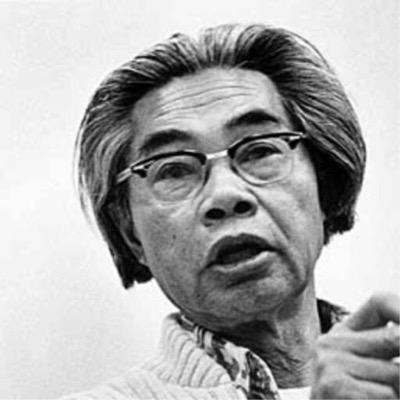
Philip Vera Cruz, featured prominently in the article.

Philip Vera Cruz with fellow UFW leaders Dolores Huerta, Richard Chavez, Mack Lyons, Marshall Ganz, Cesar Chavez, Gil Padilla, and Pete Velasco.
Sources:
Omatsu, G. (1994). The 'Four Prisons' And The Movements Of Liberation. The State of Asian America, 19-69.
Vera Cruz images: https://pbs.twimg.com/profile_images/638585647641460736/5CI-cr64_400x400.jpg
http://www.bayaniart.com/wp-content/uploads/2016/06/Philip-Vera-Cruz-Chavez-UFW.jpg

No comments:
Post a Comment