Saturday, May 4, 2013

Think Before You Speak, The Government is Listening

Leigh Hiura
ASA2 Section A02
Reading: ASNE memo on the patriot act II

What concerns me most as a citizen is that this act is strikingly similar to the Patriot Act. The Domestic Security Enhancement Act of 2003 puts our rights in jeopardy and is actually very frightening if you read through it. It basically allows the government to do whatever they want as long as it is for “public safety” or “the fight against terrorism”. They can state these two excuses and then tap into our phones, emails, and whatever else they would like without it being even remotely illegal. They can even tap into news reporter’s business without a warrant because the reporters are under a specific category that allows the government to do so. What also worries me as an Environmental Science major as well as a future homeowner is that they can withhold information regarding environmental impacts, which may result in deaths of homeowners. This I find to be totally useless and very hazardous to the public’s well being. We should be able to know what is wrong with the land that we want to purchase in order to make educated decisions. My question for this reading is why does the government think they need to go to these lengths to “keep us safe”? Is this all really necessary? 

Reading Reflections #6: Deportation: Right? Wrong? Both?

In response to: “Deporting Our Souls and Defending Our Immigrants” by Bill Ong Hing

            Over the course of my Asian-American studies, I've read a lot of Hing’s writings. Usually, it has been very insightful and opened new perspectives for me. I've often agreed with his points and views. This time, however, I’m finding it difficult to pick a side.
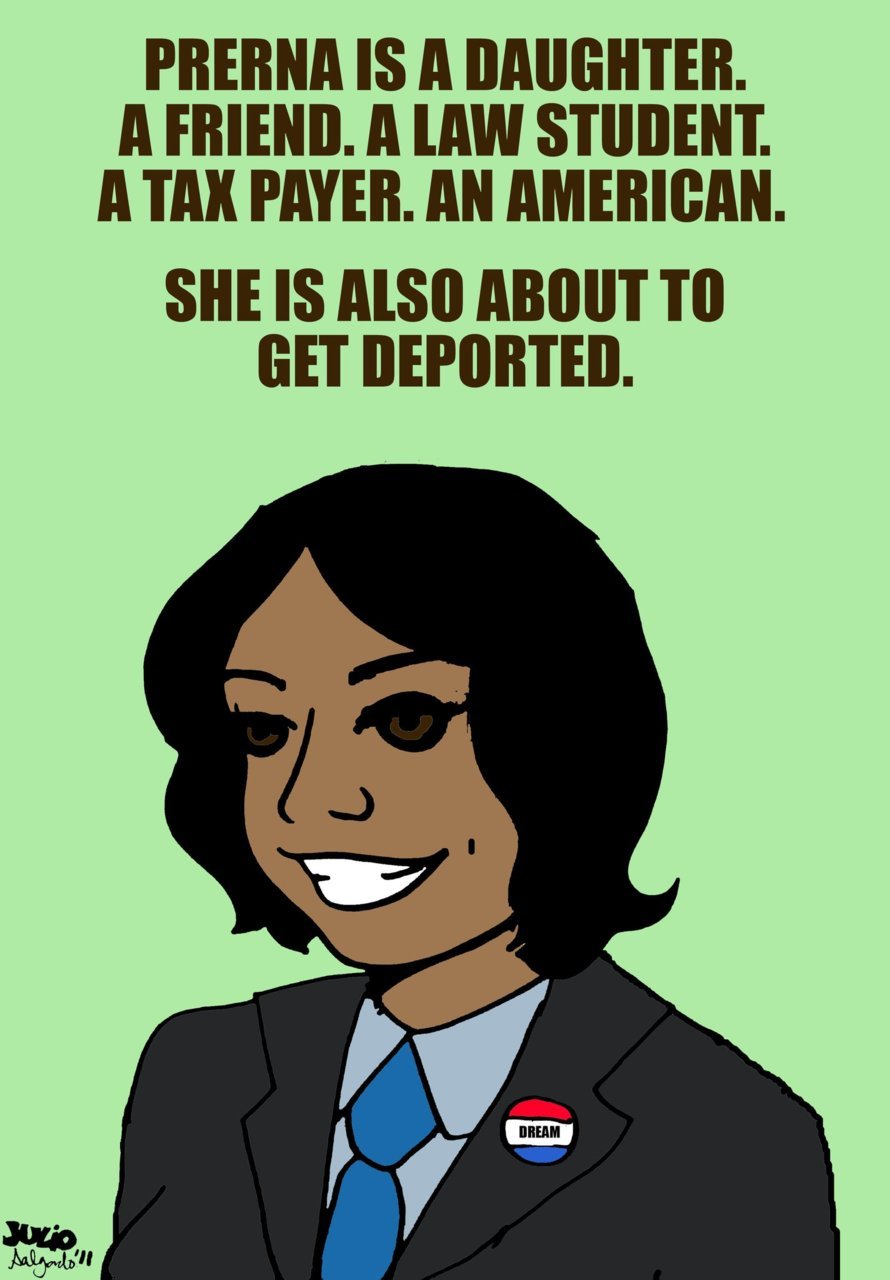
            In his article, Hing describes the deportation of undocumented Asian felons as unjust. He suggests that the lack of support from traumatized family members, accepting gangs and various problems in immigrant populations are justification for these crimes. He says it is unfair to deport these young immigrants.
            I agree that deportation is a little extreme. These people are essentially American. It would be unfair and, frankly, stupid, to send them back to a country they know nothing about. I believe they should be allowed to stay here, on the condition that they put every effort into rehabilitation. If they can agree to that, they could become great assets to America.

However, I hate it when people try to justify crimes with PTSD or gang influences or even “role reversals.” I’m not heartless. I truly sympathize with anyone affect by the Indo-China conflict. I realize these situations were extremely traumatizing and life destroying. I understand the power a gang has, especially when your home life is all screwy. But there are literally millions of people who have gone through the same type of trauma and problems and they come out just fine.
Perhaps this speaks more to the type of help not offered by American society. We need people trained to deal specifically with trauma of Indo-China refugees. “American” psychology is drastically different from how mental health is dealt in Asian cultures. Or, even at the most basic level, America has to recognize these people need help. It’s the Model Minority Myth (MMM) again. The MMM suggests all Asians are successful in all aspects of life, economically, socially and even mentally. America sees the healthy and ignores the clearly present, but invisible damaged.

Questions: 
What should be done with the undocumented immigrants who have committed felons? Technically, they don’t have papers and aren’t legally “Americans.” America doesn’t have any responsibility in these cases. Do you send them back to their “home” country? Do you send them elsewhere to a third country? Do you keep them hidden and just choose to not deal with them?

 Linda Wei
Section A01

Friday, May 3, 2013

US response


Ka Pou Sin
Blog Entry for Week 6
May 3,2013


Looking at the article, “CRS Report for Congress”, I feel that the United States is hiding something from us. Us, citizens, should be notified about the truth behind the incident on September 11, 2001. However, all the US did was pass more laws and which only shows that they will punish the people more but it does not tell us why is it happening. Why did we get attacked if we are not involved with anything? I believe we should know the truth of who and why did we get attacked. What the US is doing is just making things seem like they are taking care of the situation but in fact, they are not. They are hiding the facts from us people.  I don’t think people who does the crimes care about how they are punished or what’s their penalty, because the moment they decide to do it , it’s known that they’ll get punished for doing so. So, passing laws to increase the penalties for crimes will not help in anything except make the innocent ones feel better. The innocent ones are the ones who believe in the government and the ones who are clueless about the real world happenings. 

Thursday, May 2, 2013

After 9-11


Aung Lin
ASA 2-Reading Reflection #6
Title: After 9-11
Word Count:408
1.       Title: “The USA Patriot Act: A Sketch” by Charles Doyle
2.       “ASNE Memo on the Patriot Act II”
Security after 9-11
I clearly remember after 9-11, how the government checked people’s email and record phone conversations. Whenever my family called Myanmar to talk to my remaining relatives there, we don’t dare to say a word about 9-11. We were afraid of government spies arresting us for gossiping about 9-11. It was scary how the government is keeping an eye on everyone’s activities down to credit cards. After reading these two articles I realized that America is no longer America after 9-11. The government begun to invade people’s privacy with all these searching. They broke the first amendment which is freedom of speech. People can’t say what they want anymore because they might be considered as terrorists. They also broke the fourth amendment by unreasonable searching without a search warrant.

Questions:
1)      After 9-11, how many billions of dollars did US government spent on the USA Patriot Act? Where did all that money came from? Cutting budgets in schools?
2)      We never had another terrorist attack after 9-11. Is it because of all the high security procedures added to every place in US?


3.       “Monster, Terrorist, Fag: The War on Terrorism and the Production of Docile Patriots” by Jasbir K. Puar and Amit S. Rai.
Osama Bin Laden
I agree with Puar and Rai about Osama Bin Laden. I’ve never seen a man full of hate and a monster that destroyed our happiness and killed thousands of innocent Americans. I can’t believe some people made fun of Bin Laden after 9-11. This is a serious business and it is rude to joke around this time. After 9-11, I felt bad for the Sikh men because at the airports, they were forced to remove their turbans so the security can check for weapons. What they don’t understand is that their turbans can’t be removed because it is a mandatory symbol of Sikh religion. They were frequently mistaken as terrorists.

Questions:
     1)      What is the difference between Al-Qaida and the Taliban? Is Bin Laden in charge of them or how are they involved with 9-11 terrorist attacks?
     2)      Does Bin Laden has personality disorders and considered mentally ill like Charles Ruby noted in this article?
3)      What does homosexuality has to do with Patriotism after 9-11? 

APIQ Volunteer Option Blog #1

James Kim
ASA 2
Section A02

     So far, I've attended one APIQ meeting this quarter to get a better feel for how APIQ works before actually planning anything and I have to say that it's been both educational and a lot of fun. For those of yall who don't know, APIQ stands for Asian Pacific Island Queers and the club essentially provides a safe space for those identified as API, Queer, or both to seek guidance from those who also share similar identities. The club encourages its members to re-educate and empower themselves in order to accept and embrace who they are. The meeting I went to was "APIQ Jeopardy" where we answered questions related to APIQ history, sex, UC Davis, APIQ core members, and other miscellaneous categories. I found that there were a great deal of things that I didn't know about the community despite the fact that I identify as APIQ myself; I wasn't aware that Mark Tanako was the first APIQ-identified congressman and that the Stonewall riots of 1969 provided the impetus for modern day activism and social justice in the LGBT community.
     Something I noticed about the meeting was that it was rather complex yet very simple in that the topics covered were heavy and serious, yet the atmosphere was so joyful and light-hearted. I realized then that, even though as queer activists we're expected to raise a fist to society all the time and go "Ra Ra Ra!" until we achieve social justice, we're ultimately human beings and shouldn't have to feel angry all the time because, quite frankly, who has the energy for that? This negativity reinforces the perpetuation of animosity and hate and our goals is that we honestly just want to love and be loved. We like to have fun too, and the most shocking part is that society has dehumanized my way of thinking to the point where I feel like I can't feel comfortable and have fun anymore because there is so much discrimination that has yet to be addressed. APIQ is here to celebrate queerness and exists so that we have the space to do so.

Is it really unfair?

Taimu Yamauchi
Section A01


           In the reading “Deporting our souls and defending our immigrants” by Bill Ong Hing, gave a background of how many Asian American immigrants are deported back to their home countries if they commit a big enough crime. The article went on with a tone that it was unfair towards the immigrants, and that something should be changed. The author suggested multiple ideas, which included trying to rehabilitate the Asian American convict by making them do community service, and placing them in a “residential treatment facility”. The author also suggested changing the environment of the Asian American communities which are more likely to commit crimes, by offering or even enforcing programs such as after-school tutoring programs, counseling programs, and parenting skill programs.
            Although I believe that the methods suggested by the author is very reasonable, and probably the best way to improve this problem, but I disagree that it is unfair for the immigrants to be deported from the US. Committing a crime, no matter what the circumstance is, should not be aloud. Being an immigrant and committing a crime means that one is worsening a country of which they are not even from. Immigrants should be aware of the consequences that may occur if they are caught, and should thus act cautiously to not commit any crimes. I believe that letting immigrants know of the consequences of deportation, through whatever the means, should be enough warning for them to not do the crime if they are do not want to get deported. If the rehabilitation method costs too much money and resources, I believe the quick fix to make it “more fair” for the Asian American immigrants is to clearly let them know of the consequences of being deported.
.
Question: Is it truly unfair for the Asian American immigrants to be deported after committing a crime that is as severe as an aggravated felony?

Wednesday, May 1, 2013

Deporting our Youths

In the article Deporting Our Souls and Defending Our Immigrants, we learn about how high the statistics are of crimes committed by southeast Asians. They are primarily committed by Cambodian Americans and studies have shown that that may have been from Post traumatic stress disorder. The refugees from Cambodia experienced severe trauma whiles escaping the Pol Pot regime. Kim Ho’s case is very interesting that he was going to get departed but could not because the United states had not formed a repatriation agreement with Cambodia. He appealed the federal court and won the release. Then later he was deported because an agreement was signed in 2002. It is shameful that he was granted the opportunity to stay but later it changed because of the repatriation. It is troubling that he had to be removed from a country he called home since the age of two and be taken to a country he had to flee as a child. It is important we help young youth in their transition in living in America. They have a cultural shock and do not have the support from their parents to adjust to being “Americanized.” We should follow the lead of a group called United Cambodian Community in Long Beach, CA because they are making efforts to keep the youth from joining a gang and promoting good habits such as studying and finding a job. We must not give up on our youth but support them and steer them in the right direction.

Sarak Ouch

Week 6