Sunday, January 27, 2019

Week 4: Raylph Evangelista - A01

Raylph Evangelista
913184220

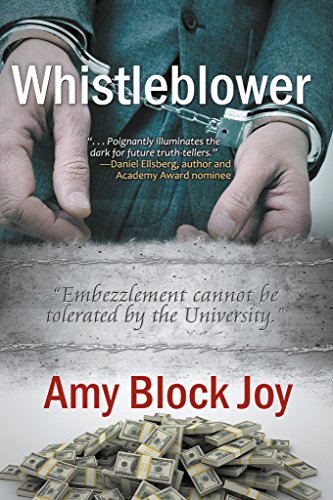
After going over the given readings, it seems as though this week we are going to delve into a topic that I seriously didn't even bother looking into until I started taking this class. When I read A Tale of Two Campuses: Berkeley and Davis Respond to Occupy movements, it really boggled my mind when I found out how Berkeley responded to the Occupy movement. The students who protested were able to do so peacefully and even got what they wanted without having to get pepper sprayed. Why UC Davis responded the way they did will always be a big question for me. I can't believe that a school that is part of the same string of universities in California would resort to the creation of danger for their students, while a fellow university does the complete opposite. What makes this all the more worse, is that UCD actually tried to cover everything up and act like it didn't happen. I can't help but wonder whether the damages that happened at Davis were due to the school itself, or if they are fully attributed to the chancellor at that time. Another one of the readings which stood out to me was the first chapter of the book Whistleblower. I could actually feel the fear that Amy Block Joy was trying to convey in her writing. The fact that she had to be questioned by the police because she wanted to stand by her beliefs and tell the truth astonishes me. It is quite admirable however that she wanted to speak out against the criminal activity going on at the University of California, Davis. To be completely honest I feel like I would have given up if I was her. The fact that people kept trying to silence her is terrifying because she didn't know who she could rely on and who was part of the "embezzling" in which she found out about. In all, I think that there are some fishy things that happen at the University of California, Davis. I think that it is important that we the students are aware of them, even though there may not be anything going on right at this moment.

Why couldn't Davis handle the Occupy movement the same way Berkeley did?
Image result for uc davis pepper spray
References
Markow, Alan. A Tale of Two Campuses: Berkeley and Davis Respond to Occupy movement, IVN, 2011.
Joy, Amy Block. "Chapter 1." Whistleblower, Bay Tree Publishing, 2010, pp. 1-9.
Feldman, Brian. UC Davis Tries to Scrub Pepper-Spray Incident From Web, Which Means It’s Now the First Result on Google, New York Magazine, 2016.

Natalie Lortz Week 4 A03

I’ve noticed a reoccurring theme within this class, which is the introduction of institution into everyday life. In regards to this reading, it would be an inclusion of the institution into moral issues and students’ response to it. For example, the Kipnis situation obviously sparked an intense ethical debate about the safety of students on campus. It also highlighted a pattern of passionate young student activists lacking focus on real issue, run by fierceness of emotions which leads to pre-emptive mobilization to point out the wrong-doings, especially those of people in authority. 

The system was created to maintain itself & perpetuate a hierarchy with students on the bottom as consumers. As students, it wouldn’t be wise to take our issues higher up into the institution. To do so would be to operate within the system… which means to do so would be to lose. It’s no one’s fault and I value those who are passionate in their fight against the power. However, I propose a call to an alternative method. We can’t fix, fight, or break the system. We simply need to create a new one and pray we don’t fall into the same trap. Perhaps then, we must create a system that is flexible and capable of inclusiveness while keeping justice as it’s first priority.
References:
DeBoer, Fredrick. "Why We Should Fear University, Inc." The New York Times Magazine, 9 September 2015, 1-8.

Roeder, Phil. (Photographer). (2015, November 23). From Civil Rights to Black Lives Matter [digital image] Retrieved from https://www.theatlantic.com/education/archive/2015/11/student-activism-history-injustice/417129/

Week 4 Section 002 Christopher Esparza-Lezo

In Whistleblower by Amy Joy, I was shocked to learn the professor’s career was in jeopardy for exposing an embezzlement situation at the University. It was difficult to come to terms an experienced employee of over 30 years work experience in the University of California system became a prime subject in a criminal investigation. The embezzlement appeared to be organized amongst multiple staff members in high authority positions if there were no swift responses to the reports joy sent out in her emails.
Unmaking the Public University by Christopher Newfield held serious implications for the department of Chicano studies. Being a Chicano myself the history behind budget cuts within the UC system and research opportunities within the field felt troubling. Even though the student lead protests took place during the 1990’s I believe there would still be a strong response by students in the 21st century motivated to protest budget cuts that hinder the Chicano studies department. If we examine previous student mobilization efforts, Chicano student motivation lead to the creation of Hispanic culture as a field of study through the creation of El Plan de Santa Barbara. In my opinion since the history of Chicano’s was founded on a Chicano movement which was an equal rights movement to integrate Hispanics into education, law and increased work wages of field work I am not surprised first generation students themselves protested proposition 187.
Proposition 187 hit home for many Chicano students since historically laws have been non-existential if not for the Chicano movement. Therefore, students protested the prop 187 by letting policy makers know ‘most stike supporters were first generation college students . . ., they had worked to get into public research universities and . . .were demanding resources for more academic work’ (Newfield 2008). Like our previous generation’s students fought for equal integration within higher education by stating ‘the need for more research into cultural and social issues – for cultural, social political, and economic knowledge that would not overlook or be biased against Latino communities’ (Newfield 2008)
It was admirable students fought for a set of principles to ensure equality in society through education. By voicing out the importance of Chicano studies as a field in graduate studies, research can be conducted to defeat or validate social issues facing the Latino community. In securing Chicano culture as a field of study within education students and future generation can now encourage institutions which produce knowledge to fight on their behalf. Lastly, by securing a strong foothold into education students like myself can ensure crucial fields about our culture is not hindered by the financial crises faced in the state. This means students do not have to worry about losing their department and crucial resources in the department due to less funding (Newfield 2008). All these principles set the stage and provide us the tools to fight conservative beliefs in a period of crisis. For example, president Trumps rhetoric on Hispanics depicts everyone as criminals causing an increase in funding for federal branches like the Immigrations and Customs Enforcement.


In the picture above, Chicano students protest prop 187. The proposition would deny undocumented immigrants from high education ensuring the fact this group remains marginalized. Attitudes about border security and nativism, classism probably contributed to the attitudes of conservative politicians decisions to create such a prop. 
One question I have about Unmaking the Public University is what factors caused the revenue shortfall in the California government?

Works Cited


De La Pena, A. (n.d.). Prop 187 protest – Downtown LA – 1994 [Photograph]. Downtown LA.


Joy, A. B. (2010). Whistleblower. Point Richmond, CA: Bay Tree Pub.
Newfield, C. (2008). Unmaking the Public University. The Forty Year Assult on the Middle Class. Retrieved January 26, 2019.


Week 4 - Skye Jin A01


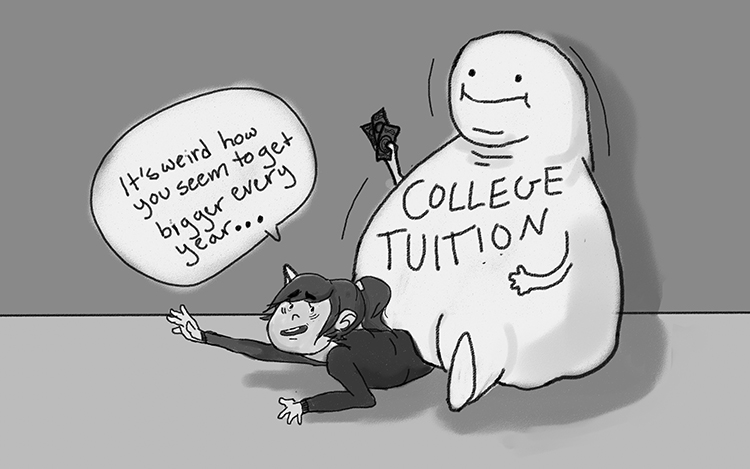
Among reading materials of Week 4, the most impressive passage would be Why We Should Fear University, Inc. Against the corporate taming of the American college by FREDRIK deBOER for me. As an international student in university, I have resonated with the things described in the content since these really happened in my daily life----just like what is indicated by Fredrik, the University tends to like a corporation. I felt the same when I saw increasing tuition bills were sent to me. Instead of paying attention to provide comfortable and academical learning conditions, the college seems to more focus on maximizing the profit from students. Based on "Occupy movements", it is easily shown that students are unsatisfied with the way the campus of UC Davis to solve this problem. Will a student choose a university that its education level and tuition are not proportional? The answer is definitely no. In my opinion, what the campus did was harmful for academic reputation in the long run because there will be decreasing excellent students choose Davis due to campus's attitude towards education. Then, my question would be: how does the university balance its tuition with a similar academic level through a series of adjustments?

Image result for tuition

Reference:
Image, Retrieved from https://theorion.com/61566/opinion/increased-tuition-raises-questions-and-encourages-struggle/

Week 4 A04 Lohitashwa Garikipati


Week 3 Blog Post
Amy Block Joy’s two articles reveal a lot about the difficulty in becoming a whistleblower. In everyday life we are presented with events where we see what we might consider injustice occurring, yet many people often would prefer to not take action to correct these issues. The bystander affect can grip people entrenched in complex systems of power, rendering them effectively mute. That’s why it is incredibly oppressive that Joy risked “the kiss of death” to her career in academia by going forward and exposing the embezzlement that was occurring in the system. Of course, unless one is at the top it is impossible to prevent others from retaliating, especially if corruption leads all the way to the top of the chain of power. Because Joy told everyone, including the chancellor, everyone was made well aware of the issue, however, even then issues may be swept under the rug because it avoids public judgment. In this case, Dr. Savage, her direct superior, even tried to cover up and silence the matter, which left Joy feeling in a predicament. She felt unable to trust anyone, and was unsure who was complicit in the embezzlement. Her other piece, “Ethics & ‘Breaking Bad’: Developing and practicing ethical skills” discusses some of the barriers many face when trying to report malpractice. She says that “fear and peer-pressure” were barriers which prevented people from taking action. Therefore, it seems that people don’t know what is right or wrong, but rather have difficulty reporting it without anonymity. The question then becomes; how can we better provide members large organizations anonymous outlets to report malpractice?


 Image result for bystander 

Citations:
1. Joy, A. B. (n.d.). Whistleblower. Tree Publishing LLC.
2. Joy, A. B. (2015, August 06). Looking Back: A Corporate Compliance & Ethics Week Success Story. Retrieved from http://complianceandethics.org/looking-back-a-corporate-compliance-ethics-week-success-story/
3. The Bystander Effect is about more than the diffusion of responsibility. (2016, July 30). Retrieved from https://digest.bps.org.uk/2016/06/29/the-bystander-effect-is-about-more-than-the-diffusion-of-responsibility/

Week 4 Anna Bamford A02

Anna Bamford
1/27/19
A02

Out of this week's readings, I thought that the most interesting was Amy Block Joy's account of her interview with a Davis police detective after she blew the whistle on embezzlement in her department at UC Davis.  The details and results of her actions are unclear, as the reading only includes the first chapter of her book "Whistleblower," in which she recounts the contents of the interview, her feelings during the experience, and describes some of her experience leading up to the interview.  I would be interested to hear more about her story and gain a clearer understanding of the embezzlement she alludes to in her writing.
I thought that this reading connected somewhat to the article "Why We Should Fear University, Inc." by Fredrik deBoer.  DeBoer describes how American universities are becoming structured like corporations, and the impacts this has on campus politics.  When I think of whistleblowing, I usually think of either corporations or the government.  I thought it was interesting to read about whistleblowing in academia, something I hadn't considered before, after reading the article comparing universities to corporations.
It's been strange reading articles about UC Davis, since they always show very different sides of the school than those I have experienced.  I don't know much about administration at this school, since I only ever interact with students and professors.  It also makes you think about the scale of the school, and how I'm just going to the same five or so buildings every week but there's so much going on all the time outside of my scope.

Image result for Amy Block Joy

Block Joy, A.  (2010)  Whistleblower.  Bay Tree Publishing.

DeBoer, F.  (2015)  Why We Should Fear University, Inc.  The New York Times Magazine.


Week 4 Tianxing Sun A02

Tianxing Sun
Week 4 
Section A02


After I reading the article "Why We Should Fear University, Inc------Against the corporate taming of the American college." by Fredrik deBoer, I was not surprising: this phenomenon seems every where in the United States. Universities and Colleges spend  large amount of money on something useless. For example, UC Davis, have built a lecture hall this quarter, in the center of the campus, which is called California Hall. This building only have one lecture room, and several sofas and restroom. A big, new, beautiful building, is using for only one lecture hall. Like deBoer said in his article, college build an advantage aerospace building, but students seldom use it. Similarly, the most commonly lecture hall, Wellman Hall and Olson Hall, are old and many rooms are small. I believe the campus should improve the facilities which students commonly using, instead of building beautiful and useless building. These changes may directly improve our college lives. 

Question: How common are universities wasting money on useless programs in the United States?


F. deBour. (2015). "Why We Should Fear University, Inc------Against the corporate taming of the American college." Retrieved from The New York Times.

Pictures Source. (2018). https://www.wrnsstudio.com/project/ucd-student-vet-med